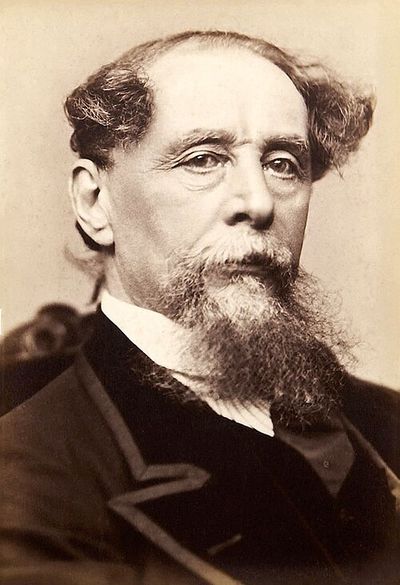
Charles Dickens
English novelist, 1812–1870. 5 explained quotes.
If you spend even a little less than you earn, you are fine. If you spend even a little more, you are in trouble. The size of the gap matters less than which side of the line you are on.
Read the full explanation →Tiny Tim, a sick little boy from a poor family, asks God's blessing on everyone at the Christmas table. Dickens ends the whole book with it, turning a child's grace into a blessing on the reader.
Read the full explanation →Scrooge, shown his own lonely grave, promises to live by the spirit of Christmas, meaning generosity and kindness, every day of the year, not just on December 25.
Read the full explanation →Dickens describes the years before the French Revolution as a time of extremes, then adds the sting: it was much like his own day, when people also insisted everything was either the best or the worst.
Read the full explanation →At a holiday gathering, don't dwell on what the year has taken from you. Count what you still have, because everyone has many blessings and every life has some sorrow.
Read the full explanation →No quotes match these filters yet. New quotes are added every week.
About Charles Dickens
Charles Dickens worked in a blacking factory as a boy while his father was in a debtors’ prison, then became a reporter and, from his twenties, the most popular novelist in the English-speaking world.
His novels came out in monthly or weekly parts, so he wrote openings and endings designed to hook readers, which is one reason so many of his lines are still quoted.
More lines by Dickens
Short quotes checked against their sources.
- “It is a far, far better thing that I do, than I have ever done; it is a far, far better rest that I go to than I have ever known.”A Tale of Two Cities, final chapter, 1859
- “Please, sir, I want some more.”Oliver Twist, 1838
- “It is a far, far better thing that I do, than I have ever done; it is a far, far better rest that I go to than I have ever known.”A Tale of Two Cities, 1859