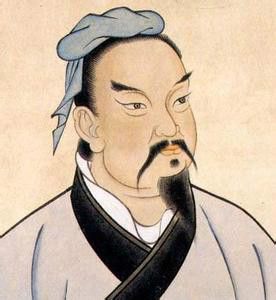
The exact words
Few lines from ancient China are quoted as often in Western boardrooms and locker rooms as this one, and few are trimmed so badly in the process. The passage closes the third chapter of The Art of War, a chapter titled “Attack by Stratagem” that argues the best general wins without fighting at all. Coming at the end of that argument, the line is less a battle cry than a summary of everything that has come before it: victory starts with information, and the information that matters most is about both sides.
What Sun Tzu meant
The passage is built as a ladder with three rungs. On the top rung is the commander who understands the enemy’s strength, plans and morale and is honest about his own. He can choose when to fight and when to stay home, so no number of battles can put him in danger. On the middle rung is the commander who knows only his own army. He wins some and loses some, because every success depends on luck about what the other side is doing. On the bottom rung is the commander who knows neither, and Sun Tzu’s verdict on him is blunt: he will be in peril in every battle.
What makes the passage memorable is that the middle rung is where most people actually live. It is natural to know your own team, your own business or your own argument well, and to assume the other side is roughly like you. Sun Tzu’s point is that this comfortable half-knowledge only earns a coin toss. The commentators Giles translated make the same point with a story: Fu Chien, a fourth-century prince, boasted that his army was so large it could dam the Yangtze with its riding whips, ignored warnings about the generals facing him, and was routed at the Fei River.
Why it promises safety, not victory
English readers often meet the line as “know your enemy and know yourself, and you will win a hundred battles,” but that is not what the Chinese says. The final word of the first clause, 殆, means danger or peril. Giles rendered it as “you need not fear the result,” and other translators give “you will not be imperiled” or “you will never be at risk.” None of them say you will always win.
The difference matters because it matches the spirit of the whole book. Sun Tzu repeatedly praises the general who avoids unwinnable fights, protects his army and waits for the enemy to make a mistake. Knowing both sides is valuable precisely because it tells you when not to fight. Read that way, the line is a lesson in prudence as much as in aggression, and it applies just as well to a negotiation, a job interview or an exam as to a war.
What people get wrong
“Know your enemy and know yourself, and you will win every battle.”
Sun Tzu never promises victory. The key word, 殆 (dài), means danger or peril, so the line says you will not be put at risk, not that you will always win. That fits the rest of the book, which values avoiding defeat and winning without fighting over glorious battles. The popular version also drops the second and third sentences, which are the real lesson. Knowing yourself without knowing your rival only gets you a coin toss, and knowing neither guarantees disaster.
Timeline
- c. 500 BC (traditional)Tradition credits The Art of War to Sun Wu, known as Sun Tzu, a general said to have served the king of Wu in eastern China. Most scholars think the text reached its final form somewhat later, during the Warring States period, but it has carried his name for over two thousand years.
- c. AD 200The warlord Cao Cao writes the earliest surviving commentary on the book. His edition, which contains this passage word for word, becomes the standard text that later commentators build on.
- 1910The British sinologist Lionel Giles publishes the first reliable English translation, with notes from the Chinese commentators. His wording, “you need not fear the result of a hundred battles,” is the version most English readers first meet.
- 1980s–todayThe book becomes a bestseller among business readers, coaches and sports teams, and this line, usually shortened to “know your enemy and know yourself,” becomes its most quoted sentence.
Use it in a speech
Questions people ask
Where does “know your enemy and know yourself” come from?
From The Art of War by Sun Tzu, Chapter 3 (Attack by Stratagem), section 18.
Does Sun Tzu say you will win every battle?
No. The Chinese says you will not be in danger (百戰不殆). Popular versions that promise a win in every battle are paraphrases.
What is the full quote?
In Lionel Giles's translation: “If you know the enemy and know yourself, you need not fear the result of a hundred battles. If you know yourself but not the enemy, for every victory gained you will also suffer a defeat. If you know neither the enemy nor yourself, you will succumb in every battle.”
Cite this quote
These cite the original source directly, so you can use them in an essay or paper. Always check your teacher's required style.