The exact words
Where the line comes from
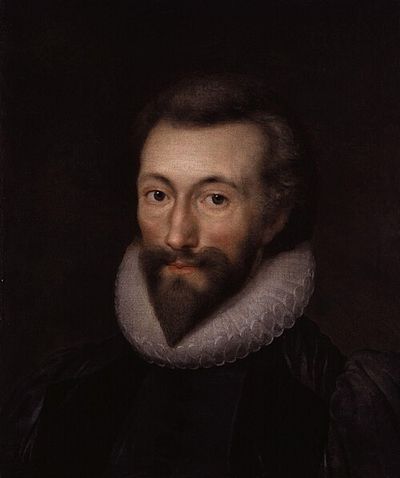
At the end of 1623 John Donne, by then Dean of St Paul’s Cathedral and one of the most famous preachers in London, fell seriously ill with a fever. Doctors feared for his life. Lying in bed, he wrote a series of twenty-three short “devotions,” each made up of a meditation, an expostulation and a prayer, following the course of his illness day by day. They were published in 1624 as Devotions upon Emergent Occasions.
In the seventeenth meditation, Donne hears a church bell tolling slowly for someone who is dying. In his weakened state he wonders whether the bell might be for him, and then realizes that, in a sense, it is. “No man is an island, entire of itself; every man is a piece of the continent, a part of the main.” If even a clod of earth is washed into the sea, Europe is smaller. In the same way, “any man’s death diminishes me, because I am involved in mankind, and therefore never send to know for whom the bell tolls; it tolls for thee.”
What it means
Donne’s point is about connection. Nobody exists in isolation, and so nobody’s death is only their own. When anyone dies, all of humanity loses a piece of itself, and the bell that rings for them rings for every listener too, both as a loss and as a reminder of their own mortality. For a Christian preacher, it was also a reminder to prepare one’s soul.
The passage is prose, but its rhythm is so strong that it is often printed in lines like a poem. Ernest Hemingway took the title of his 1940 novel about the Spanish Civil War, For Whom the Bell Tolls, from it and printed the passage as the book’s epigraph.
How to use it
The passage is one of the most fitting readings for a funeral or memorial, especially for someone who belonged to a community. Read the whole sentence through “it tolls for thee,” which takes about thirty seconds. In writing, call it a meditation or a passage rather than a poem.
What people get wrong
A poem about friendship and not being alone.
It is prose, not a poem, written by a man who thought he might be dying. Its point is that every death, even a stranger's, is a loss to each of us.
Timeline
- 1621Donne becomes Dean of St Paul's Cathedral in London.
- Late 1623Donne falls gravely ill, probably with typhus or relapsing fever, and writes a series of meditations on each stage of his sickness.
- 1624Devotions upon Emergent Occasions is published. Meditation XVII, on hearing a church bell toll for a death, contains the famous passage.
- 1940Ernest Hemingway takes the title of his novel For Whom the Bell Tolls from the same passage.
Use it in a speech
Questions people ask
Who wrote “No man is an island”?
The English poet and preacher John Donne, in Meditation XVII of Devotions upon Emergent Occasions, published in 1624.
Is “No man is an island” a poem?
No. It is a passage of prose, although it is often printed in lines like a poem.
What does “for whom the bell tolls” mean?
Church bells were rung for the dying and the dead. Donne says not to send someone to find out who has died, because every death is partly your own loss: the bell tolls for you.
What did the original spelling look like?
The 1624 text reads “No man is an Iland, intire of it selfe.”
Cite this quote
These cite the original source directly, so you can use them in an essay or paper. Always check your teacher's required style.