The exact words
Who coined it
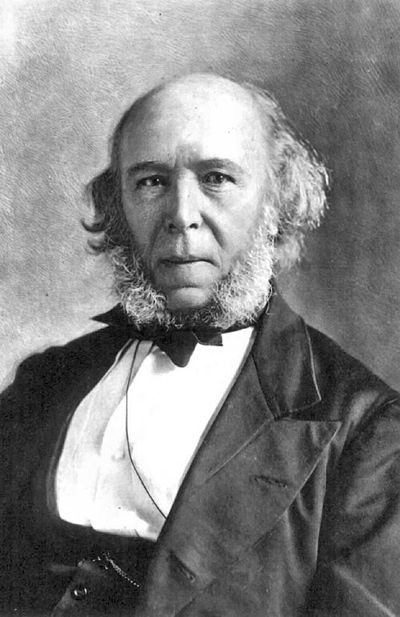
“Survival of the fittest” is so closely tied to Charles Darwin that most people assume it was his. It was coined by Herbert Spencer, an English philosopher who tried to apply evolutionary ideas to everything from biology to society. In 1864, five years after Darwin published On the Origin of Species, Spencer wrote in The Principles of Biology: “This survival of the fittest, which I have here sought to express in mechanical terms, is that which Mr. Darwin has called ‘natural selection.’”
Darwin liked it. His friend Alfred Russel Wallace urged him to use it, because “natural selection” made some readers imagine nature consciously choosing. From the fifth edition of the Origin in 1869, Darwin added it to the chapter title, “Natural Selection; or the Survival of the Fittest,” and wrote that “the expression often used by Mr. Herbert Spencer of the Survival of the Fittest is more accurate, and is sometimes equally convenient.”
What “fittest” means
In biology, “fit” means fitted to a place, the way a key fits a lock. The fittest organisms are the ones best suited to their environment, which makes them more likely to survive and leave offspring. Depending on the conditions, that might mean being fast, but it might equally mean being small, well hidden, able to go without water, or good at cooperating. The phrase does not mean that the strongest or most aggressive always win.
How the phrase was misused
In the late nineteenth century, the phrase was borrowed to argue that poverty, inequality and even imperialism were natural and good, since the “fittest” rose to the top. These ideas, later called social Darwinism, owed more to Spencer and his followers than to Darwin, and they misread the biology. In writing, credit Spencer and explain “fittest” carefully; it is one of the most misunderstood phrases in science.
What people get wrong
Charles Darwin's phrase, meaning the strongest survive.
Herbert Spencer coined it. Darwin later adopted it. In biology, the “fittest” are those best suited to their surroundings, which can mean smallest, best hidden or most cooperative.
Timeline
- 1859Charles Darwin publishes On the Origin of Species, describing evolution by “natural selection.”
- 1864Herbert Spencer, reading Darwin, coins “survival of the fittest” in The Principles of Biology.
- 1869In the fifth edition of the Origin, Darwin adopts the phrase, calling it “more accurate, and sometimes equally convenient.”
- Late 1800sThe phrase is used to justify harsh competition and inequality, later labeled “social Darwinism.”
Use it in a speech
Questions people ask
Who coined “survival of the fittest”?
The English philosopher Herbert Spencer, in The Principles of Biology (1864), after reading Darwin's On the Origin of Species.
Did Darwin use the phrase?
Yes, later. From the fifth edition of the Origin (1869) Darwin used it alongside “natural selection,” calling Spencer's term more accurate.
Does “fittest” mean strongest?
No. It means best fitted to the environment, the most likely to survive and reproduce in particular conditions. That can mean camouflage, small size or cooperation as easily as strength.
Cite this quote
These cite the original source directly, so you can use them in an essay or paper. Always check your teacher's required style.