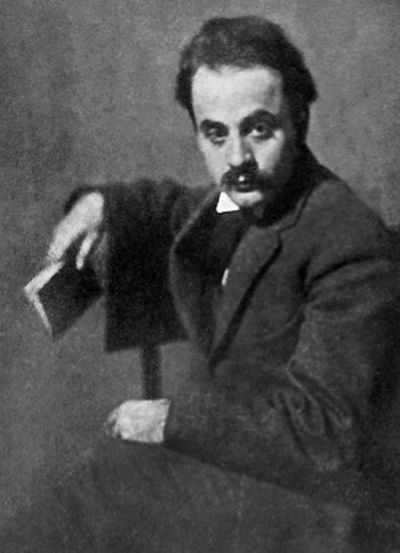
The exact words
“Your children are not your children. They are the sons and daughters of Life's longing for itself. They come through you but not from you, And though they are with you yet they belong not to you.”Kahlil Gibran, The Prophet, “On Children” (1923)
✓ VerifiedFound in a primary source: the original book, speech transcript, letter or recording.
What people get wrong
Common reading
A cold line telling parents not to be attached to their children.
A cold line telling parents not to be attached to their children.
Closer to the original
The passage is full of love. Its point is that loving children means letting them become themselves. It ends by picturing the parent as a bow that God bends so the arrow can fly far, and asks parents to bend gladly.
The passage is full of love. Its point is that loving children means letting them become themselves. It ends by picturing the parent as a bow that God bends so the arrow can fly far, and asks parents to bend gladly.
Timeline
- 1923Gibran publishes The Prophet, in which a wise man named Almustafa answers questions from townspeople before he sails away. A woman holding a baby asks him to speak of children.
- 1960s onwardThe Prophet becomes a bestseller with a new generation, and “On Children” is read at baby namings, weddings and graduations.
Use it in a speech
Kahlil Gibran told parents, your children are not your children; you are the bows from which they are sent forth. Today, Mom and Dad, you let go of the string. Watch how far we fly.
~12 secondsto say aloud
Pauseafter “sent forth”
Best spotthe thank-you to parents
Gibran wrote that parents are the bows and children the arrows. Thank you for bending, Mom, so that I could fly.
~7 secondsto say aloud
Pausenone needed in a card
Best spotthe main line of the card
Kahlil Gibran says children come through their parents, not from them. Dad, thank you for being the bow that sent me out into the world.
~8 secondsto say aloud
Pausenone needed in a card
Best spotthe main line of the card
Questions people ask
Who wrote “Your children are not your children”?
Kahlil Gibran, in “On Children,” a section of his book The Prophet (1923).
What is the bow and arrow image?
Gibran writes that parents are the bows from which children, as living arrows, are sent forth, and asks parents to let themselves be bent with gladness.
Is The Prophet in the public domain?
In the United States, yes. Works published in 1923 entered the public domain there in 2019.
Cite this quote
These cite the original source directly, so you can use them in an essay or paper. Always check your teacher's required style.
MLAGibran, Kahlil. “The Prophet, “On Children”.” 1923. Project Gutenberg, www.gutenberg.org/ebooks/58585.
APAGibran, K. (1923). The Prophet, “On Children”. Project Gutenberg. https://www.gutenberg.org/ebooks/58585
CHICAGOKahlil Gibran, “The Prophet, “On Children”,” 1923.
IN TEXT (APA)(Gibran, 1923)