The exact words
Where the line really comes from
The phrase “an eye for an eye” goes back thousands of years, to the Code of Hammurabi and to the Hebrew Bible, where it set a limit: punishment should match the injury and go no further. The twist, that following this rule leaves everyone blind, is a modern one. It expresses the core of Gandhi’s philosophy so neatly that it feels as though he must have said it. But in his roughly hundred volumes of collected writings, speeches and letters, it has not been found.
The closest early printed version comes from Martin Luther King Jr., who was deeply influenced by Gandhi. In his 1958 book Stride Toward Freedom, about the Montgomery bus boycott, King wrote that “the old law of an eye for an eye leaves everybody blind.” King may have been echoing something he had heard, but he did not credit it to Gandhi.
How Gandhi got the credit
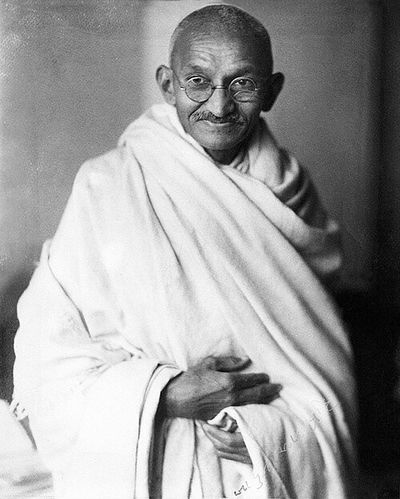
The decisive moment was Richard Attenborough’s 1982 film Gandhi, which won eight Academy Awards. In it, Ben Kingsley’s Gandhi says that “an eye for an eye only ends up making the whole world blind.” Screenwriters often put summary lines into historical characters’ mouths, and this one was so good that it became, for millions of viewers, simply something Gandhi said. Gandhi’s grandson Arun Gandhi has said his family believes the Mahatma used the phrase, but that is family memory, not a record.
How to quote it
The idea is faithful to Gandhi’s thinking, so it is reasonable to say it “is often attributed to Gandhi.” If you want a verified source, quote King’s 1958 version. In a speech, the safest path is to present it as a saying rather than putting it in anyone’s mouth.
What people get wrong
A famous saying of Gandhi's.
A line that fits Gandhi's beliefs but has no source in his writings. A very similar sentence appears in Martin Luther King Jr.'s 1958 book.
Timeline
- AncientThe law of “an eye for an eye” appears in the Code of Hammurabi and in the Hebrew Bible (Exodus 21:24), originally as a limit on revenge.
- 1958Martin Luther King Jr. writes in Stride Toward Freedom that “the old law of an eye for an eye leaves everybody blind.”
- 1982The film Gandhi has Gandhi say “An eye for an eye only ends up making the whole world blind,” spreading the attribution worldwide.
- TodayThe line is credited to Gandhi in countless books and speeches, though researchers have found no record of him saying it.
Use it in a speech
Questions people ask
Did Gandhi say “an eye for an eye makes the whole world blind”?
There is no evidence he did. The line does not appear in his Collected Works. Gandhi's grandson Arun Gandhi has said the family believes he said it, but no contemporary record has been found.
Where does the line come from?
A close version appears in Martin Luther King Jr.'s 1958 book Stride Toward Freedom, and the 1982 film Gandhi gave it to its title character, which made the attribution famous.
What does “an eye for an eye” originally mean?
In ancient law, including the Bible, it limited punishment to match the harm done, rather than allowing unlimited revenge.
Cite this quote
Don't cite this line as Mahatma Gandhi's words. There is no reliable source showing they said it. If you need to mention it, say it is “often attributed to Mahatma Gandhi” and, if you want a reference, cite this page:
Sources
- Martin Luther King Jr., Stride Toward Freedom (1958).
- Quote Investigator, “An Eye for an Eye Will Make the Whole World Blind,” 2010.
- Exodus 21:24, King James Version.