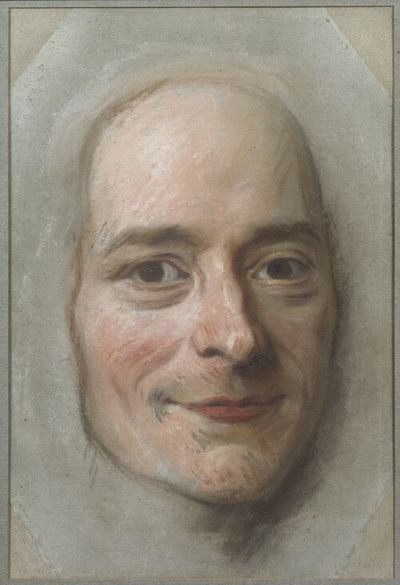
The exact words
Where the line really comes from
In 1906 the English writer Evelyn Beatrice Hall, using the pen name S. G. Tallentyre, published The Friends of Voltaire, a set of portraits of people in Voltaire’s circle. One chapter tells the story of the philosopher Claude-Adrien Helvétius, whose book De l’esprit caused a scandal in 1758 and was condemned by the Church and the French authorities and publicly burned. Voltaire did not think much of the book, but he thought even less of persecuting its author.
Hall summed up his position in a vivid sentence: “‘I disapprove of what you say, but I will defend to the death your right to say it,’ was his attitude now.” The quotation marks were a stylistic device to express his attitude, but readers naturally took them as Voltaire’s words, and within a few years the sentence was being quoted as his.
Hall’s correction
Hall was asked about the line later in life. In a 1939 letter she explained that she had not meant to imply Voltaire used those words and would be surprised if they were found in his works; they were her own phrase. By then it was far too late. The sentence had become one of the most famous statements of free speech in the English language, and Voltaire’s name was permanently attached.
How to use it
The sentence is a fair summary of Voltaire’s values; he spent decades fighting censorship and religious intolerance, and he wrote many real lines about tolerance. So the safest form is “as Voltaire’s biographer put it” or “a line often attributed to Voltaire.” Crediting Evelyn Beatrice Hall is accurate and makes for a memorable footnote.
What people get wrong
Voltaire's own words about free speech.
A 1906 summary of Voltaire's attitude by his biographer Evelyn Beatrice Hall. It is a fair description of his views, but not his sentence.
Timeline
- 1758The philosopher Helvétius publishes De l'esprit, which is condemned and burned in Paris. Voltaire thought little of the book but opposed its persecution.
- 1906Evelyn Beatrice Hall, writing as S. G. Tallentyre, sums up Voltaire's attitude to the affair with the famous sentence, set in quotation marks.
- 1939Hall explains in a letter that the words were her own phrasing of Voltaire's attitude, not something he said or wrote.
- TodayThe line is quoted worldwide as the classic statement of free speech, almost always credited to Voltaire.
Use it in a speech
Questions people ask
Did Voltaire say “I disapprove of what you say, but I will defend to the death your right to say it”?
No. The sentence was written by Evelyn Beatrice Hall, under the pen name S. G. Tallentyre, in her 1906 book The Friends of Voltaire, to describe his attitude.
Why is it in quotation marks in her book?
Hall put the words in quotation marks as a way of expressing his attitude, and readers took it as a direct quote. She later clarified that it was her own phrasing.
Did Voltaire believe in free speech?
He campaigned against censorship and religious persecution throughout his life, so the summary is fair, even though the words are not his.
Cite this quote
Don't cite this line as Voltaire's words. There is no reliable source showing they said it. The real source is Evelyn Beatrice Hall (as S. G. Tallentyre), The Friends of Voltaire, so cite that instead. If you need to mention it, say it is “often attributed to Voltaire” and, if you want a reference, cite this page: