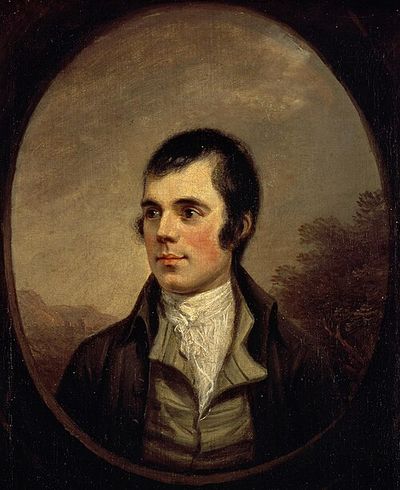
The exact words
“Should auld acquaintance be forgot, And never brought to mind? Should auld acquaintance be forgot, And auld lang syne!”Robert Burns, “Auld Lang Syne” (1788), published in The Scots Musical Museum (1796)
✓ VerifiedFound in a primary source: the original book, speech transcript, letter or recording.
What people get wrong
Common reading
A song about forgetting the past and moving on.
A song about forgetting the past and moving on.
Closer to the original
It is the opposite. The question “should auld acquaintance be forgot?” is rhetorical, and the chorus answers it: “we'll tak a cup o' kindness yet, for auld lang syne.” It is a promise to remember.
It is the opposite. The question “should auld acquaintance be forgot?” is rhetorical, and the chorus answers it: “we'll tak a cup o' kindness yet, for auld lang syne.” It is a promise to remember.
Timeline
- Before 1788Versions of a song called “Auld Lang Syne” already exist in Scotland. Burns says he took it down from an old man's singing.
- 1788Burns sends his version to the editor of The Scots Musical Museum, adding verses of his own.
- 1796The song is published shortly after Burns's death. Scottish emigrants spread it around the world.
- 20th centuryIt becomes the standard song at midnight on New Year's Eve across the English-speaking world, helped by bandleader Guy Lombardo's yearly broadcasts in the United States.
Use it in a speech
In a minute we'll all sing Auld Lang Syne without knowing the words. So here's the point of it: should old friends be forgotten? Never. To all of you.
~9 secondsto say aloud
Pauseafter “be forgotten”
Best spotjust before midnight
Robert Burns asked, should auld acquaintance be forgot? Not this one. Whatever comes next, we'll take a cup of kindness yet for the years we worked together.
~10 secondsto say aloud
Pauseafter “Not this one”
Best spotthe final toast
Questions people ask
What does auld lang syne mean?
Literally “old long since.” It means times long past, or the good old days.
What does “should auld acquaintance be forgot” mean?
“Should old friends be forgotten?” The song's answer is no.
Did Robert Burns write Auld Lang Syne?
Partly. Burns said he collected an old song and wrote it down, and he added verses of his own. The version sung today is his.
Cite this quote
These cite the original source directly, so you can use them in an essay or paper. Always check your teacher's required style.
MLABurns, Robert. ““Auld Lang Syne,” sent to the Scots Musical Museum.” 1788. Project Gutenberg, www.gutenberg.org/ebooks/1279.
APABurns, R. (1788). “Auld Lang Syne,” sent to the Scots Musical Museum. Project Gutenberg. https://www.gutenberg.org/ebooks/1279
CHICAGORobert Burns, ““Auld Lang Syne,” sent to the Scots Musical Museum,” 1788.
IN TEXT (APA)(Burns, 1788)