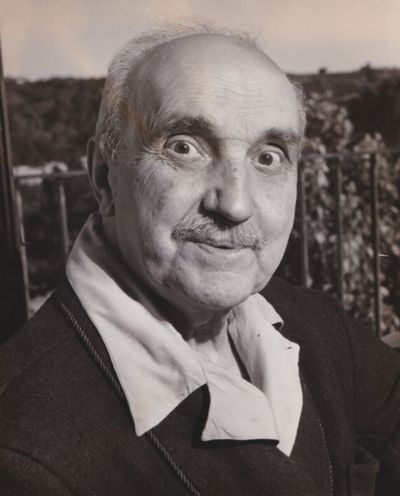
The exact words
What Santayana meant in 1905
The line comes from the first volume of The Life of Reason, a five-volume work in which Santayana traced how human reason develops, in individuals and in civilizations. In the chapter where it appears, he is describing the conditions for progress, and his argument is a little surprising: progress, he says, does not consist in change but in “retentiveness.” If everything changes completely, there is nothing left to improve. If experience is not kept, people and societies remain in a kind of permanent infancy.
“Those who cannot remember the past are condemned to repeat it” is the conclusion of that argument. A child who cannot remember burning its hand will touch the stove again; a society that keeps no memory of its experience will make the same mistakes. Santayana’s sentence includes a phrase typical of its time, “as among savages,” that reflects the prejudices of 1905, and it is usually omitted when the line is quoted.
How the line changed
Because the sentence is so quotable, it quickly broke away from its book. It is often reworded as “those who do not learn history are doomed to repeat it,” which shifts the meaning from memory in general to the study of history, and it is often credited to others, including Winston Churchill, who made a similar remark in Parliament in 1948. Santayana’s version is subtler: it is about the continuity of experience, of which formal history is only one part.
How people use it today
The line is used most often as a warning against forgetting wars, atrocities and political mistakes, and a version of it appears at the Auschwitz memorial. That use fits the spirit of Santayana’s argument well. In an essay, quote his exact words and, if you have room, the sentence before it about progress depending on retentiveness; it shows you know where the idea comes from.
What people get wrong
“Those who do not learn history are doomed to repeat it,” a warning about political mistakes.
Santayana wrote “remember the past,” and he was making a broader philosophical point that progress of any kind requires memory and continuity.
Timeline
- 1905Santayana publishes Reason in Common Sense, the first of five volumes of The Life of Reason. The line appears in a chapter on the stages of human thought.
- 20th centuryThe sentence is quoted and requoted, often reworded as “those who do not learn history are doomed to repeat it.”
- TodayA version of the line is displayed at the Auschwitz-Birkenau memorial, and it is a staple of history classrooms.
Use it in a speech
Questions people ask
Who said “those who cannot remember the past are condemned to repeat it”?
The philosopher George Santayana, in The Life of Reason, volume 1, Reason in Common Sense, published in 1905.
Is it “learn from history” or “remember the past”?
Santayana wrote “those who cannot remember the past are condemned to repeat it.” Versions with “history” and “doomed” are later rewordings.
Did Churchill say it?
Churchill said something similar in Parliament in 1948, but the famous sentence is Santayana's.
Cite this quote
These cite the original source directly, so you can use them in an essay or paper. Always check your teacher's required style.