The exact words
The friend behind the line
At Cambridge in 1829, the young Alfred Tennyson met Arthur Henry Hallam, a brilliant student who became his closest friend and greatest supporter. Hallam got engaged to Tennyson’s sister Emily, and the two young men seemed set to be brothers for life. In September 1833, while traveling in Vienna, Hallam died suddenly of a brain hemorrhage. He was 22.
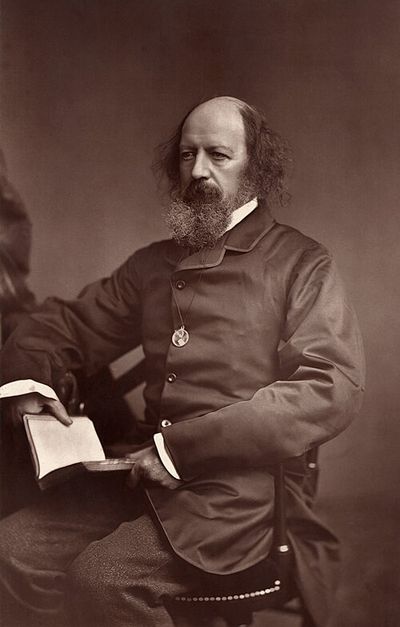
Tennyson was shattered. Over the next seventeen years he wrote short lyrics about his grief, his doubts and his slow recovery, and in 1850 he published them together as In Memoriam A.H.H., a long poem of 131 sections plus a prologue and epilogue. It made him the most famous poet in Britain, and the same year he was named Poet Laureate. Queen Victoria later said it comforted her after the death of Prince Albert.
What the stanza means
Canto 27 is short. Tennyson says he does not envy creatures that cannot feel loss, like a caged bird that has never known the forest or an animal that lives only in the present. Their peace is not worth having. Then comes his conclusion: “I hold it true, whate’er befall; / I feel it, when I sorrow most; / ’Tis better to have loved and lost / Than never to have loved at all.”
The power of the lines is in “when I sorrow most.” He is not saying it from a safe distance, after the grief has faded. He believes it at the worst moments: the pain of losing Hallam is the price of having loved him, and he would pay it again.
How to use it
The line has drifted into breakup advice, and it works there. Its original setting makes it especially fitting at funerals and memorials, as a way of honoring how much someone was loved. Credit Tennyson; it is often wrongly given to Shakespeare.
What people get wrong
Consolation for a romantic breakup.
Tennyson wrote it after the death of his best friend, Arthur Hallam. The “loss” is death, and the love is friendship.
Timeline
- 1829Tennyson meets Arthur Henry Hallam at Cambridge. They become inseparable friends, and Hallam becomes engaged to Tennyson's sister Emily.
- 1833Hallam dies suddenly of a brain hemorrhage in Vienna, aged 22.
- 1833–1849Tennyson writes short poems of grief over seventeen years, which grow into In Memoriam.
- 1850In Memoriam A.H.H. is published. Canto 27 contains the famous lines. The same year Tennyson becomes Poet Laureate.
Use it in a speech
Questions people ask
Who said “'Tis better to have loved and lost than never to have loved at all”?
Alfred, Lord Tennyson, in canto 27 of his long elegy In Memoriam A.H.H., published in 1850. It is not Shakespeare.
Who was A.H.H.?
Arthur Henry Hallam, Tennyson's closest friend from Cambridge, who died suddenly in 1833 at the age of 22.
Is the line about a breakup?
Not originally. It is about grief after a death. People use it for romance now, which is fine, but the original is deeper.
Cite this quote
These cite the original source directly, so you can use them in an essay or paper. Always check your teacher's required style.