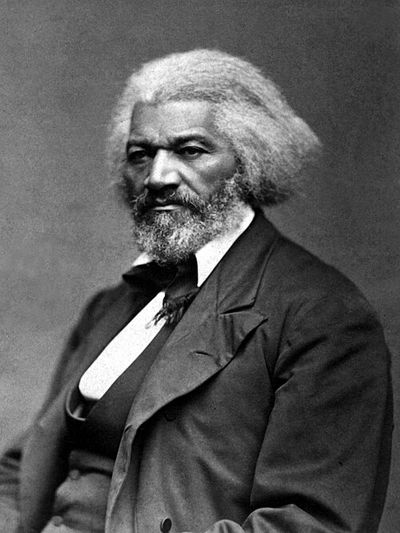
The exact words
What Douglass meant in 1857
Every August, American abolitionists celebrated the anniversary of the end of slavery in the British West Indies, which had taken effect on August 1, 1834. In 1857 Douglass spoke at such a celebration in Canandaigua, in upstate New York, at a dark moment. That spring the Supreme Court’s Dred Scott decision had declared that Black Americans could never be citizens, and slavery seemed stronger in the United States than ever.
Douglass used the British example to make a point about how freedom is won. West Indian emancipation, he argued, had not been a gift from a kindly government; it had followed decades of agitation, resistance by enslaved people themselves and relentless pressure. The famous passage generalizes the lesson. Progress requires struggle, struggle is uncomfortable, and people who want change without conflict are like farmers who want crops without plowing. “Power concedes nothing without a demand. It never did and it never will.”
Why the images work
Douglass was one of the most powerful speakers of the nineteenth century, and this passage shows his method. He states the principle in one short sentence, then makes it vivid with three images from nature: crops without plowing, rain without thunder and lightning, the ocean without its roar. Each image says the same thing in a new way, so by the end the idea feels like a law of nature rather than a political opinion.
How people use it today
The opening sentence is now a popular motivational quote about personal effort, printed on gym walls and school posters. That reading is not wrong, but it is small. Douglass was talking about political struggle against people with power, and the rest of the passage makes that clear. When you quote it, the line about power conceding nothing without a demand is the half that shows you know what he meant.
What people get wrong
A motivational line about personal hard work and self-improvement.
A political argument that people in power never give up privileges voluntarily, so oppressed people must organize and demand change.
Timeline
- August 1, 1834The Slavery Abolition Act takes effect across most of the British Empire, freeing enslaved people in the British West Indies.
- March 1857The Supreme Court's Dred Scott decision declares that Black Americans cannot be citizens.
- August 3, 1857Douglass speaks at an anniversary celebration of West Indian emancipation and delivers the passage on struggle.
- 1863–1865Emancipation Proclamation and the Thirteenth Amendment abolish slavery in the United States.
Use it in a speech
Questions people ask
When did Frederick Douglass say “if there is no struggle there is no progress”?
On August 3, 1857, in a speech at Canandaigua, New York, marking the anniversary of the end of slavery in the British West Indies.
What comes after it in the speech?
Douglass compares people who want freedom without agitation to those who want “crops without plowing up the ground,” and adds: “Power concedes nothing without a demand. It never did and it never will.”
Is “power concedes nothing without a demand” from the same speech?
Yes. It comes a few sentences later in the same passage.
Cite this quote
These cite the original source directly, so you can use them in an essay or paper. Always check your teacher's required style.
Sources
- Frederick Douglass, Two Speeches by Frederick Douglass; West India Emancipation... and the Dred Scott Decision (Rochester, 1857). Library of Congress.
- The Frederick Douglass Papers, Series One, vol. 3, ed. John W. Blassingame (Yale University Press).