The exact words
What Franklin meant in 1789
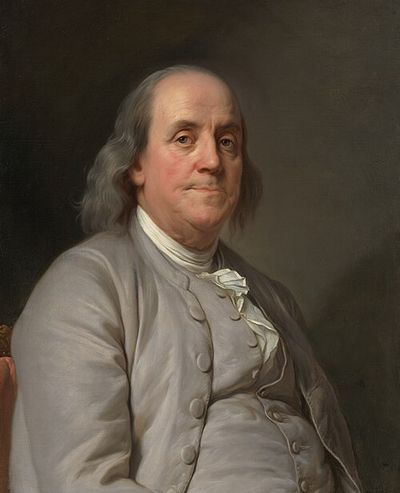
In November 1789 Franklin was eighty-three, in constant pain from gout and kidney stones, and living in Philadelphia after years as the American representative in France. He wrote often to friends in Paris, and this letter to the scientist Jean-Baptiste Le Roy reports on news in America, including the new federal Constitution, which had taken effect that spring with George Washington as president.
The famous line is a gentle qualification. The Constitution, Franklin wrote, “has an appearance that promises permanency,” but in this world nothing can be said to be certain, except death and taxes. It is a joke, but it carries some weight coming from a man who had helped write the Constitution, had seen governments rise and fall, and knew his own death was near. He died five months later.
The saying before Franklin
Franklin did not invent the pairing. In 1716 a comedy by the English actor and playwright Christopher Bullock, The Cobler of Preston, includes the line “’Tis impossible to be sure of any thing but Death and Taxes.” A decade later Daniel Defoe wrote of things being “as certain as death and taxes.” By Franklin’s time it was evidently a familiar saying, and he was dropping it into his letter the way we might use a well-known phrase today. His fame, and the publication of his letters in 1817, made it permanently his.
How to use it
The line is perfect for lightening a speech about money, change or the passing of time, and it works especially well at retirements and birthdays. If you are writing formally, credit Franklin but you can add that the saying predates him, which is a nice detail most readers will not know.
What people get wrong
An original Franklin joke about the tax system.
An already-familiar saying that Franklin used in a letter about whether the new Constitution would last. It was half a joke and half a reflection by a man near the end of his life.
Timeline
- 1716Christopher Bullock's play The Cobler of Preston has a character say: “'Tis impossible to be sure of any thing but Death and Taxes.”
- 1726Daniel Defoe writes of things “as certain as death and taxes.”
- November 13, 1789Franklin, aged 83 and in poor health, writes the line to his French friend, the scientist Jean-Baptiste Le Roy.
- 1817The letter is published in a collection of Franklin's correspondence and the line becomes his.
Use it in a speech
Questions people ask
Did Benjamin Franklin say “nothing is certain except death and taxes”?
Yes, in a letter to Jean-Baptiste Le Roy dated November 13, 1789. But the saying is older; versions appear in a 1716 play by Christopher Bullock and in Daniel Defoe's writing in 1726.
What was Franklin writing about?
The new United States Constitution, which had just taken effect. He said it looked likely to last, but added that nothing is certain except death and taxes.
When did Franklin die?
Five months after writing the letter, on April 17, 1790, at the age of 84.
Cite this quote
These cite the original source directly, so you can use them in an essay or paper. Always check your teacher's required style.
Sources
- Benjamin Franklin to Jean-Baptiste Le Roy, November 13, 1789. Founders Online, National Archives.
- Christopher Bullock, The Cobler of Preston (1716).
- Daniel Defoe, The Political History of the Devil (1726).