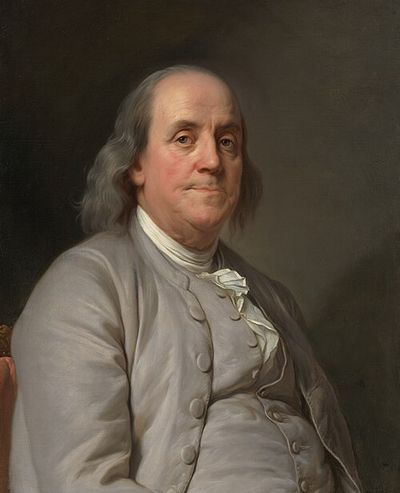
The exact words
“Remember that time is money. He that can earn ten shillings a day by his labour, and goes abroad or sits idle one half of that day, though he spends but sixpence during his diversion or idleness, ought not to reckon that the only expense; he has really spent, or, rather, thrown away, five shillings besides.”Benjamin Franklin, Advice to a Young Tradesman (1748)
✓ VerifiedFound in a primary source: the original book, speech transcript, letter or recording.
What people get wrong
Common reading
A cold slogan meaning that only money matters.
A cold slogan meaning that only money matters.
Closer to the original
Franklin was making a narrow, practical point about what economists now call opportunity cost. The half day you spend idle costs you the wages you could have earned, so count it. The rest of the letter is about honesty and keeping your word with lenders.
Franklin was making a narrow, practical point about what economists now call opportunity cost. The half day you spend idle costs you the wages you could have earned, so count it. The rest of the letter is about honesty and keeping your word with lenders.
Timeline
- 1748Franklin publishes a short essay of tips for a young businessman, written as a letter “to my friend A. B.” It opens with “Remember that time is money” and goes on to explain credit, interest and reputation.
- 1800sThe phrase becomes a slogan of American business and is quoted by writers both admiring and mocking the busy, money-minded American.
- 1905The sociologist Max Weber quotes the letter at length in The Protestant Ethic and the Spirit of Capitalism as a perfect example of the capitalist outlook.
Use it in a speech
Benjamin Franklin told a young tradesman, “Remember that time is money.” I'd add one thing he left out. Money can be earned back. Time can't. Spend it on people.
~11 secondsto say aloud
Pauseafter “time is money”
Best spotthe closing advice
Franklin's “time is money” was not a boast but a lesson in hidden costs: the half day spent idle, he explained, quietly throws away five shillings.
~8 secondsto say aloud
Pausenone needed in writing
Best spotintroduction
Questions people ask
Who first said “time is money”?
Benjamin Franklin made the phrase famous in Advice to a Young Tradesman (1748). Similar ideas appear earlier, but Franklin's wording is the one that stuck.
What does “time is money” mean?
That time spent idle has a cost, because you could have been earning during it.
Cite this quote
These cite the original source directly, so you can use them in an essay or paper. Always check your teacher's required style.
MLAFranklin, Benjamin. Advice to a Young Tradesman, Written by an Old One. 1748. Project Gutenberg, www.gutenberg.org/ebooks/40236.
APAFranklin, B. (1748). Advice to a Young Tradesman, Written by an Old One. Project Gutenberg. https://www.gutenberg.org/ebooks/40236
CHICAGOBenjamin Franklin, Advice to a Young Tradesman, Written by an Old One, 1748.
IN TEXT (APA)(Franklin, 1748)