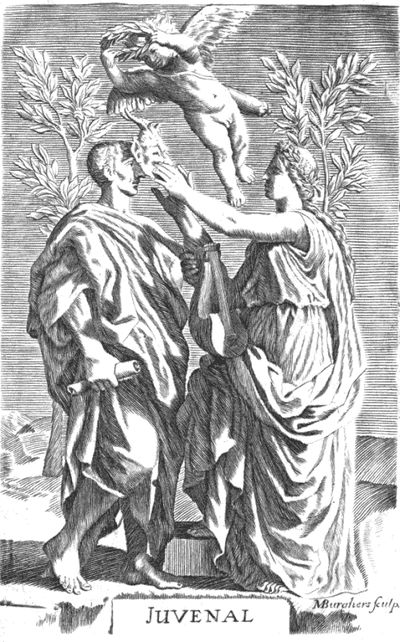
The exact words
“‘Pone seram, cohibe.’ Sed quis custodiet ipsos custodes?”Juvenal, Satire 6 (lines O31–O32 in the Oxford fragment; repeated near line 347), “‘Put on a lock, keep her in.’ But who will guard the guards themselves?”
✓ VerifiedFound in a primary source: the original book, speech transcript, letter or recording.
What people get wrong
Common reading
An ancient line about government and political power.
An ancient line about government and political power.
Closer to the original
In Juvenal it is a cynical joke about keeping a wife faithful. The political meaning was attached later, though it suits the words so well that it has completely taken over.
In Juvenal it is a cynical joke about keeping a wife faithful. The political meaning was attached later, though it suits the words so well that it has completely taken over.
Timeline
- early 2nd century ADJuvenal writes his sixth satire, a long and bitter attack on Roman wives. A friend advises locking a wife up with guards, and Juvenal replies that the guards can be bribed too.
- c. 375 BC (the idea)Plato's Republic had already asked how the guardians of the ideal city would themselves be kept in check. Juvenal's line later became the standard short way to put that question.
- 20th centuryThe phrase becomes a fixture of political writing about police, spies and governments, and “Who watches the Watchmen?” is used as graffiti in Alan Moore's 1986 comic Watchmen.
Use it in a speech
The Roman poet Juvenal asked, “Who will guard the guards themselves?” He was joking about jealous husbands, but every debate about police oversight comes back to his question.
~10 secondsto say aloud
Pausenone needed in writing
Best spotopening sentence
Questions people ask
What does quis custodiet ipsos custodes mean?
“Who will guard the guards themselves?” It is often translated “Who watches the watchmen?”
Who said it?
The Roman satirist Juvenal, in his Satire 6, written in the early second century AD.
Was Juvenal talking about politics?
No. The context is a husband who wants guards to keep his wife faithful. Juvenal's point is that the guards can be corrupted too. The political reading came much later.
Is the idea older than Juvenal?
Yes. Plato's Republic discusses how the guardians of a city should be kept honest, although Plato does not use this wording.
Cite this quote
These cite the original text directly, so you can use them in an essay or paper. Always check your teacher's required style.
MLAJuvenal. “Satires.” Satire 6. early 2nd century AD. The Latin Library, www.thelatinlibrary.com/juvenal/6.shtml.
APAJuvenal. (115). Satires. The Latin Library. https://www.thelatinlibrary.com/juvenal/6.shtml
CHICAGOJuvenal, “Satires,” Satire 6, early 2nd century AD.
IN TEXT (APA)(Juvenal, 115)