The exact words
Why it is not Burke
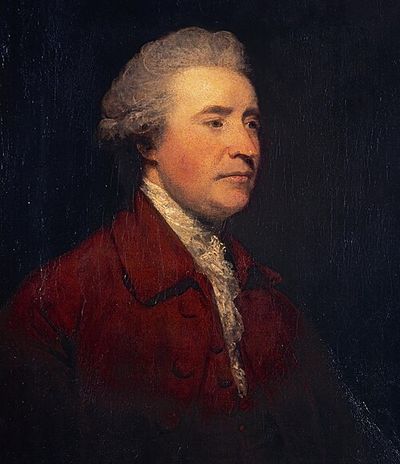
Edmund Burke’s writings and speeches have been studied intensively for more than two centuries, and the famous sentence is not among them. Scholars and quotation researchers have searched his collected works, his parliamentary speeches and his letters without finding it. The snappy form, with its punchline structure, appears only in the twentieth century, long after Burke’s death in 1797.
That does not mean Burke had nothing to say on the subject. In 1770, in a pamphlet called Thoughts on the Cause of the Present Discontents, he argued that honest politicians had to organize into parties to resist corrupt factions at court: “When bad men combine, the good must associate; else they will fall, one by one, an unpitied sacrifice in a contemptible struggle.” That is a real Burke thought, and it is about political organization rather than individual courage.
The Mill connection
Nearly a century later, the philosopher John Stuart Mill came closer to the modern wording. In his inaugural address as rector of the University of St Andrews in 1867, he told students that “bad men need nothing more to compass their ends, than that good men should look on and do nothing.” Mill’s sentence is probably the real ancestor of the saying, which was later polished, shortened and given to the more famous, more quotable-sounding Burke.
How to use it
The idea is powerful and widely accepted, so you can use it as “a saying often attributed to Burke.” In writing, Mill’s 1867 sentence is the best verified alternative, and Burke’s own line about the good needing to associate is the best way to keep Burke in the conversation.
What people get wrong
A famous line from Edmund Burke.
A modern saying built from older ideas. Burke wrote that good people must organize when bad people do, and Mill wrote that bad people only need good people to look on and do nothing.
Timeline
- 1770Burke writes that “when bad men combine, the good must associate,” the closest genuine passage.
- 1867John Stuart Mill, in his inaugural address at the University of St Andrews, says: “Bad men need nothing more to compass their ends, than that good men should look on and do nothing.”
- Mid-20th centuryThe short, snappy version credited to Burke starts appearing in print and speeches.
- TodayQuoted by presidents and prime ministers, almost always as Burke's.
Use it in a speech
Questions people ask
Did Edmund Burke say “the only thing necessary for the triumph of evil is for good men to do nothing”?
No source has been found. The sentence does not appear in Burke's speeches, books or letters.
What did Burke actually write?
In 1770 he wrote: “When bad men combine, the good must associate; else they will fall, one by one, an unpitied sacrifice in a contemptible struggle.”
Who else said something similar?
John Stuart Mill, in 1867: “Bad men need nothing more to compass their ends, than that good men should look on and do nothing.”
Cite this quote
Don't cite this line as Edmund Burke's words. There is no reliable source showing they said it. If you need to mention it, say it is “often attributed to Edmund Burke” and, if you want a reference, cite this page:
Sources
- Edmund Burke, Thoughts on the Cause of the Present Discontents (1770). Project Gutenberg.
- John Stuart Mill, Inaugural Address Delivered to the University of St. Andrews, February 1, 1867. Project Gutenberg.
- Quote Investigator, “The Only Thing Necessary for the Triumph of Evil is that Good Men Do Nothing,” 2010.