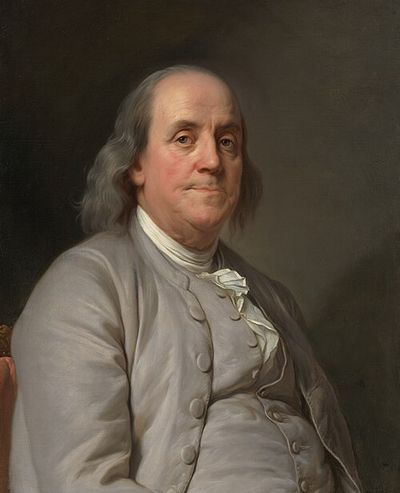
The exact words
What Franklin meant in 1755
In 1755 Pennsylvania was a proprietary colony owned by the Penn family, descendants of the founder William Penn, who lived in England and appointed the governor. The French and Indian War had begun, and settlements on the colony’s western frontier were being attacked. The elected Assembly, in which Franklin was a leading member, wanted to raise money for defense by taxing all land in the colony, including the Penns’ enormous estates. The governor, following the family’s instructions, kept vetoing the bills.
The Penns eventually offered a compromise: they would contribute a sum toward defense if the Assembly dropped its attempt to tax their lands. Franklin’s sentence, written in the Assembly’s reply to the governor, explains why the Assembly resisted. Its “essential Liberty” was the right of the people’s representatives to raise taxes and govern themselves. The “little temporary Safety” was a one-time payment for defense on the proprietors’ terms. Accepting it would trade away self-government for short-term relief.
How the meaning shifted
Read in context, the quote is almost the opposite of how it is often used. Franklin was not arguing against government security measures; he was arguing for a government’s power to tax in order to pay for security, against a wealthy family trying to buy its way out. The legal writer Benjamin Wittes laid out this history in a widely read 2011 article, and historians of the Franklin papers agree with the reading.
The line spread because it can be read as a general principle, and that principle has real force: freedoms surrendered in a crisis are rarely returned. Franklin himself seems to have liked the sentence, since it reappeared as the motto of a 1759 book defending the Assembly’s position.
How to quote it
Quote the full sentence exactly, with “essential” and “temporary,” which are often dropped and which matter to its meaning. If you use it in an argument about privacy or security, it is fair to cite Franklin, but acknowledging the original context will make your argument stronger and protect you from an easy rebuttal.
What people get wrong
Franklin was warning that giving up privacy or freedom for security is always wrong.
Franklin was defending the elected assembly's right to tax the Penn family's lands for frontier defense. The “liberty” at stake was self-government, and the “temporary safety” was a one-off payment for defense on the Penns' terms.
Timeline
- 1755Pennsylvania's frontier is under attack during the French and Indian War, and the elected Assembly wants to raise money for defense by taxing all land, including the vast estates of the Penn family.
- November 11, 1755Franklin writes the Assembly's reply to Governor Robert Hunter Morris, who had blocked the tax on the Penns' lands, and includes the famous sentence.
- 1759The line appears on the title page of An Historical Review of the Constitution and Government of Pennsylvania, published with Franklin's involvement.
- TodayWidely quoted in debates about surveillance and civil liberties, usually without its original context.
Use it in a speech
Questions people ask
Did Benjamin Franklin really write “those who would give up essential liberty”?
Yes. It appears in the Pennsylvania Assembly's reply to the governor of November 11, 1755, which Franklin wrote on the Assembly's behalf.
What was the original context?
A dispute over funding frontier defense during the French and Indian War. The Penn family, who owned the colony, refused to let their lands be taxed and offered a payment instead. Franklin argued the Assembly should not give up its right to tax in exchange.
Is the quote about privacy and surveillance?
Not originally. Franklin was writing about the power of an elected legislature to govern and tax. Modern use applies the principle more broadly.
Cite this quote
These cite the original source directly, so you can use them in an essay or paper. Always check your teacher's required style.